COLINA
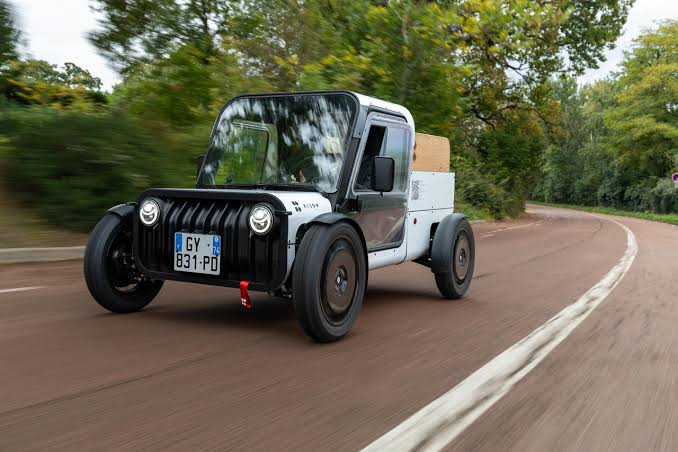
A small electric utility vehicle on a country road
Opportunities Mobility

Build shared, right-sized mobility for the Bocage

The project is called Vélis Bocagers. Led by Colina, with Bocage Zéro Carbone and La Coop des Territoires as co-leads, and in partnership with Renault and local partners, it aims to reduce dependence on a single model: light, repairable vehicles, shared and well-filled electric cars, and the pooling of existing vehicles, each in its proper place.

We're looking for
The person who will coordinate the project
Start
First quarter of 2027
Led by
Colina, with Bocage Zéro Carbone and La Coop des Territoires
Where
Bocage of the Orne

Why this project

In the Bocage, almost everything is done by car, often alone at the wheel. Yet mobility is what lets people work, train, get healthcare and see their loved ones: it is a condition for the territory to remain liveable. The problem is not the car as such, it is dependence on a single model, which weighs more and more heavily on household budgets and on our natural resources.

In summer 2026, Climact ran a test experiment on the use of Vélis in rural areas. The project grew out of a shared reflection between La Coop des Territoires and Bocage Zéro Carbone following that test, then opened up in November 2026 to Renault and to several local authorities and local actors.

80%
of rural journeys are made by car
30%
of a rural household's budget can go on mobility
13,413 km
travelled differently during the 2026 Mobility Challenge, with 94 participants

A right-sized fleet rather than a single mobility solution

No vehicle meets every need. The idea is to offer an overall mobility capacity, where each object finds its proper place:

Light vehicles

Light, electric and easy to repair, for everyday journeys: getting to work, doing the shopping, going out locally.

Shared electric cars

Right-sized and well-filled, for longer journeys or travelling together (a full car uses fewer resources than 4 light vehicles each driven alone...).

Vehicles that already exist

The fleets of local authorities and businesses, resources that are often underused, to be pooled rather than multiplied.

All of this relies on solar charging stations installed in shared places, where you charge while you are there.

What makes this experiment distinctive

The method

Bringing together four perspectives: research, public authorities, businesses and residents. Mobility is the first use case of this method led by Colina.

Repairability

A local maintenance and repair network, with vehicles that are simple to repair, working with Les Fourmis Vertes, with whom discussions are under way (for the light vehicles) and Renault's network (for conventional vehicles).

Financing

Making the fleet accessible to as many people as possible, by designing the financial engineering together with the watershed's financing facility.

Action research

Understanding what makes pooling succeed or fail in a rural area, so that others can use it.

How we're moving forward

  1. Step 1
    Understand. Study needs during the first months, with a first showcase vehicle, trials in the companies taking part in the Mobility Challenge and a survey of residents.
  2. Step 2
    Test. Launch a first right-sized fleet (light vehicles and a few electric cars), with solar charging, and check that the model holds up: uses, maintenance, costs.
  3. Step 3
    Scale up. Move towards around forty vehicles, and beyond by pooling existing fleets, with support from the watershed's financing facility.

What you would do

  • Coordinate the project and get very different partners working together: Renault, local authorities, businesses, associations, residents.
  • Launch the fleet and keep it running day to day: lending, user follow-up, charging.
  • Reach out to users, starting with businesses and the organisations taking part in the Mobility Challenge.
  • Organise vehicle maintenance and repair with Les Fourmis Vertes and local actors.
  • Track results, adjust the business model and feed into the action research.
  • Prepare the move to a larger fleet.

What is still to be decided

The project is at an early stage. The intention is set, the first funding has been approved and a core group has formed. The project's exact shape is still to be drawn: the precise make-up of the fleet, vehicle models, project governance, business model, additional funding, and so on. If this launch phase and its creativity appeal to you, join us in January!

The project partners

The people building Vélis Bocagers introduce themselves and say what they expect from the project.

Video coming soon
Bocage Zéro Carbone
Estelle Derosne
Project co-lead
Video coming soon
La Coop des Territoires
Igor Louboff
Project co-lead
Video coming soon
Renault
Estelle Conte
Research department, mobility in rural areas
Video coming soon
ADEME Normandy
Quentin Tizon
Circular economy and low-tech [JOB TITLE TO BE CONFIRMED]
Video coming soon
Pont-d'Ouilly
Arthur Allizard
Mayor
Video coming soon
Les Fourmis Vertes
Bernard Chevallier
Co-chair

A question about this project? igor.louboff@lacoop.co or jeanne.allard@lacoop.co

See all opportunities